Tippecanoe County Dog Registration Information
Service Dogs and Emotional Support Animals in Tippecanoe, Indiana
If you’re searching where do I register my dog in Tippecanoe County, Indiana for my service dog or emotional support dog, you’re not alone—many residents want to do the right thing and make sure their dog is properly documented.
The key detail: a dog license in Tippecanoe County, Indiana (when required) is a local animal-control/public-health compliance item tied to things like rabies vaccination and identification. By contrast, service dog status is defined by disability law and training/function, not a county “registration,” and an emotional support animal (ESA) is typically recognized in limited housing contexts rather than through a public “license.”
Where to Register or License Your Dog in Tippecanoe County, Indiana
Licensing and enforcement are often handled locally. The offices below are commonly involved in animal control, animal bite reporting, and rabies-related follow-up in Tippecanoe County. Use the office that matches your location (county vs. city limits) and your situation (licensing questions vs. bites/rabies reporting vs. nuisance/stray concerns).
Official Offices (Examples Within Tippecanoe County)
| Office | Contact & Address | Hours |
|---|---|---|
Tippecanoe County Animal ControlCounty jurisdiction (outside city limits)
|
Address:
2640 Duncan Road, Lafayette, IN 47904
Phone:
765-423-9321
Fax:
765-423-4155
Email:
Not publicly listed on the referenced county page.
|
Office hours not listed on the referenced county page.
|
Lafayette Animal Control (Dispatched via Lafayette Police Department)If you live within Lafayette city limits
|
Address:
Not listed on the referenced city animal control page.
Phone:
765-807-1200
|
Office hours not listed on the referenced city animal control page.
|
West Lafayette Animal Control (via West Lafayette Police/City resources)If you live within West Lafayette city limits
|
Address:
Not provided as a complete street address on the referenced page (page references Navajo Street, West Lafayette, IN 47906).
Office phone (as listed on the referenced page):
765-775-5200
Other note:
The same city page directs residents outside West Lafayette to Tippecanoe County Animal Control at 765-423-9321.
|
Office hours not listed on the referenced city page.
|
Tippecanoe County Health DepartmentRabies-related public health; animal bites are typically reported to local health
|
Address:
20 N 3rd Street, Basement, Lafayette, IN 47901
Phone:
765-423-9221
Fax:
765-423-9277
Email:
health@tippecanoe.in.gov (main email)
|
Monday–Friday
8:00 AM – 4:30 PM
|
Overview of Dog Licensing in Tippecanoe County, Indiana
Dog licensing is usually local (county/city), not a single statewide registry
When people ask where to register a dog in Tippecanoe County, Indiana, they often expect a single, statewide “registration database.” In practice, dog licensing (when required) is commonly governed by local ordinances and enforced through local animal control or local government processes. That means your answer can vary based on whether you live in the county outside city limits or inside a city that may have its own rules and enforcement channels.
Licensing, enforcement, and rabies follow-up can involve different offices
In Tippecanoe County, animal control offices often handle nuisance/stray/neglect investigations and may be the most practical starting point for licensing questions. Separately, the local health department is frequently involved in public-health response for animal bites and rabies exposure follow-up.
Rabies vaccination is a core requirement connected to public safety
Rabies prevention rules are public-health driven. Proof of current rabies vaccination is commonly required for compliance steps involving dogs (and may be requested during licensing, bite investigations, or reclaiming animals). If a bite occurs, rabies-related procedures and reporting typically involve local health authorities and animal control coordination.
How Dog Licensing Works Locally in Tippecanoe County, Indiana
Step 1: Identify your jurisdiction (county vs. city limits)
The fastest way to get the right answer for a dog license in Tippecanoe County, Indiana is to confirm where you live:
- Outside city limits: Tippecanoe County Animal Control is a common starting point for animal control and enforcement questions.
- Inside Lafayette city limits: Lafayette Animal Control (dispatched through Lafayette Police Department) is typically the correct contact for enforcement and animal control service requests.
- Inside West Lafayette city limits: West Lafayette Animal Control resources apply; residents outside those city limits are commonly directed back to county animal control.
Step 2: Ask what “registration” means for your goal
People use “register my dog” to mean different things. Before you call, clarify whether you’re trying to:
- Obtain or renew a local dog license (if applicable where you live).
- Confirm requirements for rabies vaccination documentation or tags.
- Report or respond to an animal bite (rabies follow-up, quarantine guidance, documentation).
- Confirm how local rules treat service animals, assistance animals, or emotional support animals in public spaces or housing.
Step 3: Prepare documentation typically requested
While requirements vary by locality and situation, many offices will ask for proof that your dog is currently vaccinated for rabies and may ask for identification details. If you are requesting a local license, you may be asked for residency-related information and a fee payment method.
Rabies vaccination and bite reporting (what to expect)
If you are calling because of a bite or potential exposure, expect the conversation to focus on dates (when the bite happened), vaccination status (whether the animal is vaccinated), how the animal can be observed or quarantined, and whether medical care was sought. Public-health guidance is typically coordinated through the local health department, and animal control may assist with locating/holding the animal and documenting compliance.
Service Dog Laws in Tippecanoe County, Indiana
Service dogs are not “registered” by the county to become service dogs
A common misconception behind the question where do I register my dog in Tippecanoe County, Indiana for my service dog is that there’s a county-issued service dog license that grants access rights. In the U.S., service dog status generally comes from disability law (and the dog’s training to perform specific work or tasks), not from a local “registration” program.
A local dog license (if applicable) may still apply to service dogs
Even when a dog is a legitimate service animal, local pet compliance rules can still apply—such as rabies vaccination requirements, leash laws, and (where required) obtaining a local dog license. In other words, a service dog can be both:
- a dog that must follow local animal-control rules, and
- a service animal with access rights under applicable disability laws.
What businesses and the public can ask (practical overview)
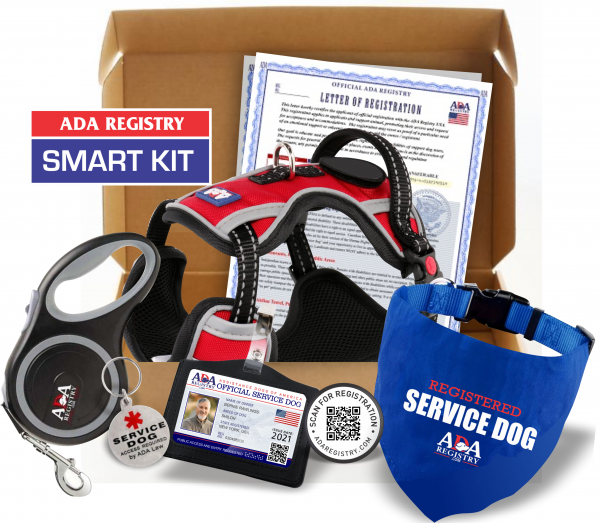
For day-to-day situations, most service dog interactions focus on behavior and whether the dog is trained to do work or perform tasks related to a disability—not on an ID card. If you encounter a request for “papers,” it can help to calmly explain that service dogs are not universally issued certificates by local governments. If you need local clarification for a specific scenario, the best “local” contact is typically the animal control office for your jurisdiction rather than a third-party registry.
Emotional Support Animal Rules in Tippecanoe County, Indiana
ESAs are different from service dogs
If your goal is where do I register my dog in Tippecanoe County, Indiana for my emotional support dog, it’s important to know that ESAs are not the same as service dogs. An emotional support animal generally provides comfort by its presence, but is not necessarily trained to perform specific tasks. Because of that difference, ESA recognition most commonly arises in housing contexts rather than public-access contexts.
There usually isn’t a county “ESA registration” you must (or can) complete
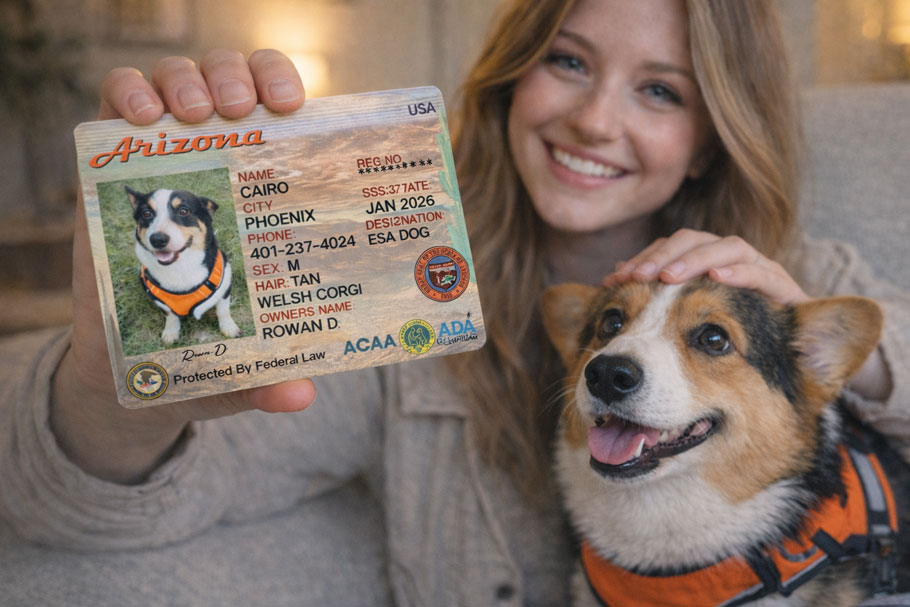
You may still need to meet normal local animal requirements such as rabies vaccination and, where applicable, a local license. But an ESA designation is typically handled through a documentation process for housing accommodations rather than through an animal control “ESA registry.” If someone is selling an “ESA license,” that is not the same thing as a locally issued dog license and is not a government-issued registration for public access.
Where local offices fit in for ESAs
Local offices are usually involved only in the standard animal compliance side (for example, vaccination verification during a bite investigation, nuisance complaints, or other animal-control issues). For housing-related ESA accommodation questions, you typically work with the housing provider and follow applicable housing rules and documentation expectations—while still keeping your dog compliant with local animal control requirements.
Frequently Asked Questions
Possibly. Service dog status and local licensing are different concepts. If a license is required in your jurisdiction, a service dog may still need to meet the same local animal compliance requirements (such as rabies vaccination and any applicable local licensing rules). If you’re unsure, call the animal control office that matches your jurisdiction and ask specifically about licensing requirements for your address.
Start by confirming whether you live inside city limits:
- Within Lafayette: contact Lafayette Animal Control via 765-807-1200.
- Within West Lafayette: contact West Lafayette animal control resources (the city page also points residents outside city limits to the county line).
- Outside city limits in Tippecanoe County: Tippecanoe County Animal Control at 765-423-9321.
It usually means you’re looking for the correct local office that handles animal-control enforcement and can direct you to the right licensing process (if your jurisdiction requires it). In Tippecanoe County, enforcement and guidance are typically handled by county animal control for areas outside city limits, and by city animal control/police dispatch resources within Lafayette or West Lafayette city limits.
Generally, no single county-issued registration “creates” service dog status or ESA status. A local license (if required) is about local animal compliance. Service dogs are defined by disability law and trained work/tasks. ESAs are typically addressed through housing accommodation processes rather than public-access registration.
Rabies exposure response typically involves the local health department and may involve animal control for locating the animal and ensuring observation/quarantine steps are followed. If your question is specifically about reporting, documentation, or next steps after a bite, contacting the Tippecanoe County Health Department is a common starting point, alongside the appropriate animal control office for the incident location.
Local Compliance Reminder
Even if you’re focused on service dog or ESA questions, don’t overlook the basics: keeping rabies vaccination current, following leash and nuisance rules, and knowing which local office enforces animal ordinances can prevent problems later—especially in the event of a complaint, a lost dog report, or an animal bite.
Register A Dog In Other Indiana Counties
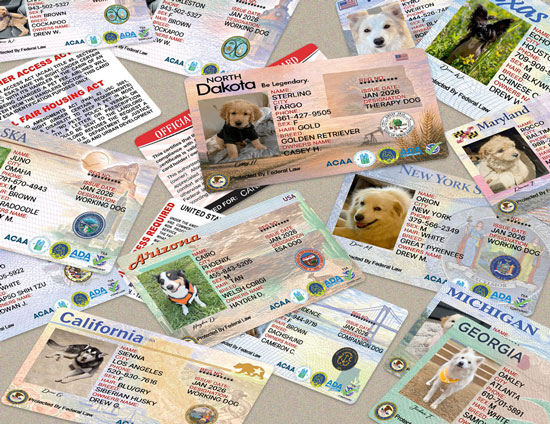
Select your county below to get started with your dog’s ID card. Requirements and license designs may vary by county, so choose your location to see the correct options and complete your pup’s registration.
- Adams County Dog Registration
- Allen County Dog Registration
- Bartholomew County Dog Registration
- Benton County Dog Registration
- Blackford County Dog Registration
- Boone County Dog Registration
- Brown County Dog Registration
- Carroll County Dog Registration
- Cass County Dog Registration
- Clark County Dog Registration
- Clay County Dog Registration
- Clinton County Dog Registration
- Crawford County Dog Registration
- Daviess County Dog Registration
- Dearborn County Dog Registration
- Decatur County Dog Registration
- DeKalb County Dog Registration
- Delaware County Dog Registration
- Dubois County Dog Registration
- Elkhart County Dog Registration
- Fayette County Dog Registration
- Floyd County Dog Registration
- Fountain County Dog Registration
- Franklin County Dog Registration
- Fulton County Dog Registration
- Gibson County Dog Registration
- Grant County Dog Registration
- Greene County Dog Registration
- Hamilton County Dog Registration
- Hancock County Dog Registration
- Harrison County Dog Registration
- Hendricks County Dog Registration
- Henry County Dog Registration
- Howard County Dog Registration
- Huntington County Dog Registration
- Jackson County Dog Registration
- Jasper County Dog Registration
- Jay County Dog Registration
- Jefferson County Dog Registration
- Jennings County Dog Registration
- Johnson County Dog Registration
- Knox County Dog Registration
- Kosciusko County Dog Registration
- LaGrange County Dog Registration
- Lake County Dog Registration
- LaPorte County Dog Registration
- Lawrence County Dog Registration
- Madison County Dog Registration
- Marion County Dog Registration
- Marshall County Dog Registration
- Martin County Dog Registration
- Miami County Dog Registration
- Monroe County Dog Registration
- Montgomery County Dog Registration
- Morgan County Dog Registration
- Newton County Dog Registration
- Noble County Dog Registration
- Ohio County Dog Registration
- Orange County Dog Registration
- Owen County Dog Registration
- Parke County Dog Registration
- Perry County Dog Registration
- Pike County Dog Registration
- Porter County Dog Registration
- Posey County Dog Registration
- Pulaski County Dog Registration
- Putnam County Dog Registration
- Randolph County Dog Registration
- Ripley County Dog Registration
- Rush County Dog Registration
- Scott County Dog Registration
- Shelby County Dog Registration
- Spencer County Dog Registration
- St. Joseph County Dog Registration
- Starke County Dog Registration
- Stueben County Dog Registration
- Sullivan County Dog Registration
- Switzerland County Dog Registration
- Tipton County Dog Registration
- Union County Dog Registration
- Vanderburgh County Dog Registration
- Vermillion County Dog Registration
- Vigo County Dog Registration
- Wabash County Dog Registration
- Warren County Dog Registration
- Warrick County Dog Registration
- Washington County Dog Registration
- Wayne County Dog Registration
- Wells County Dog Registration
- White County Dog Registration
- Whitley County Dog Registration